Panther Cap
Amanita pantherina
Family: Amanitaceae
Also called: Panther Cap, Panther Amanita, False Blusher
Overview
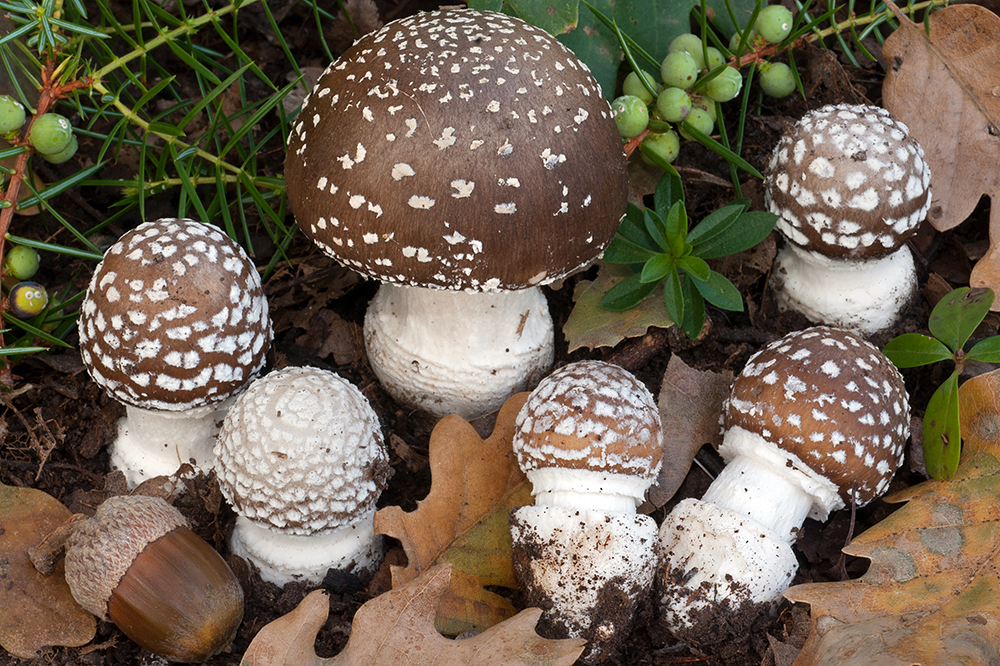
Brown-capped Amanita with white warts; same ibotenic acid / muscimol as A. muscaria but more potent — sends people to the hospital. Avoid.
Edibility
Toxic
Rarity
common
Trophic mode
mycorrhizal
Typical peak
Sep–Oct
Conditions when it's found
- Soil temp, past 3 days
- Usually 56°F to 66°F · typical 62°F
- Air temp, past week
- Usually 56°F to 66°F · typical 62°F
- Night lows, past week
- Usually 48°F to 59°F · typical 54°F
- Rain, past 2 weeks
- Usually 1.04 in to 3.19 in · typical 2 in
- Topsoil wetness
- Usually 43% to 70% · typical 56%
From the weather before 20 dated records on GBIF.org, using NASA POWER daily data. "Usually" covers the middle 80% of records. A guide to when it shows up, not a guarantee.
Season
Sep–Nov — typical fruiting months: Aug, Sep, Oct.
Host trees & substrate
- Mycorrhizal with oak
- Mycorrhizal with beech
- Mycorrhizal with hemlock
Where it grows
See live fruiting predictions for Panther Cap on the forecast home page, or browse the full field guide.
Always confirm wild-mushroom identification with multiple sources and a knowledgeable local expert before consuming. Read the foraging safety guide.