Artist's Conk
Ganoderma applanatum
Also called: Artist's Conk, Artist's Bracket, Bear Bread
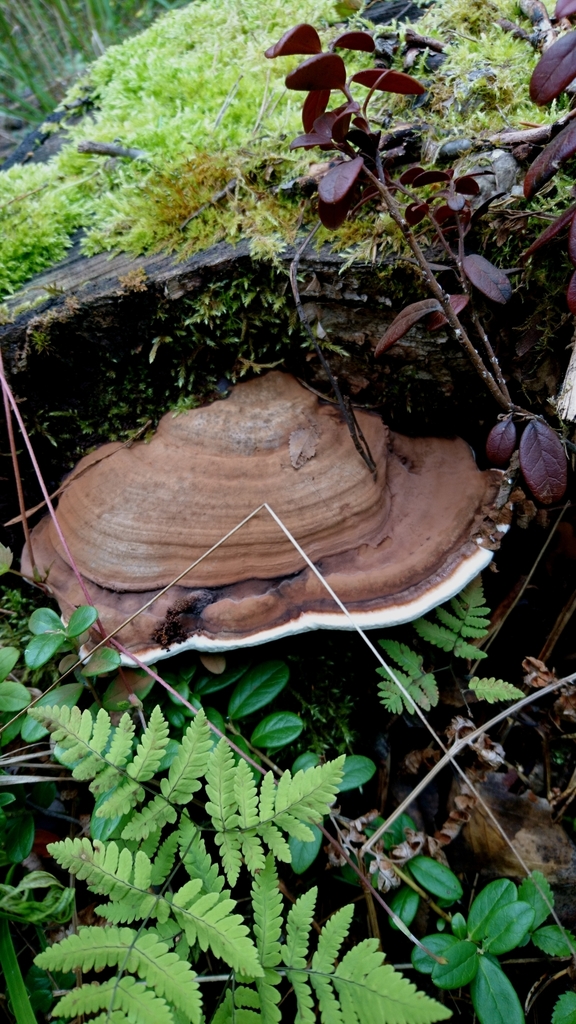
Overview
Found on dead hardwood — oak, beech, maple, cherry, and many others. One of the most common wood-decaying bracket fungi in eastern North America. Can occasionally colonize severely stressed living trees but the overwhelming majority of finds are on standing dead timber, fallen logs, and stumps. Perennial — the same conk grows larger each year, adding a new white pore layer annually. The white underside bruises brown when marked, which is why it is called artist's conk. A single specimen can live and grow for decades on the same log.
Conditions when it's found
- Soil temp, past 3 days
- Usually 29°F to 37°F · typical 32°F
- Air temp, past week
- Usually 25°F to 38°F · typical 34°F
- Night lows, past week
- Usually 21°F to 35°F · typical 29°F
- Rain, past 2 weeks
- Usually 1.04 in to 5.81 in · typical 1.47 in
- Topsoil wetness
- Usually 69% to 92% · typical 85%
From the weather before 20 dated records on GBIF.org, using NASA POWER daily data. "Usually" covers the middle 80% of records. A guide to when it shows up, not a guarantee.
Season
Year-round (perennial conk) — typical fruiting months: , Jan, Feb, Mar, Apr, May, Jun, Jul, Aug, Sep, Oct, Nov.
Host trees & substrate
- Dead hardwood — oak, beech, maple, cherry, birch, poplar
- Standing dead snags and fallen logs
Where it grows
See live fruiting predictions for Artist's Conk on the forecast home page, or browse the full field guide.
Always confirm wild-mushroom identification with multiple sources and a knowledgeable local expert before consuming. Read the foraging safety guide.