Chinese Black Wood Ear
Auricularia heimuer
Family: Auriculariaceae
Also called: Black Wood Ear, Heimuer, 黑木耳, Mokurage
Overview
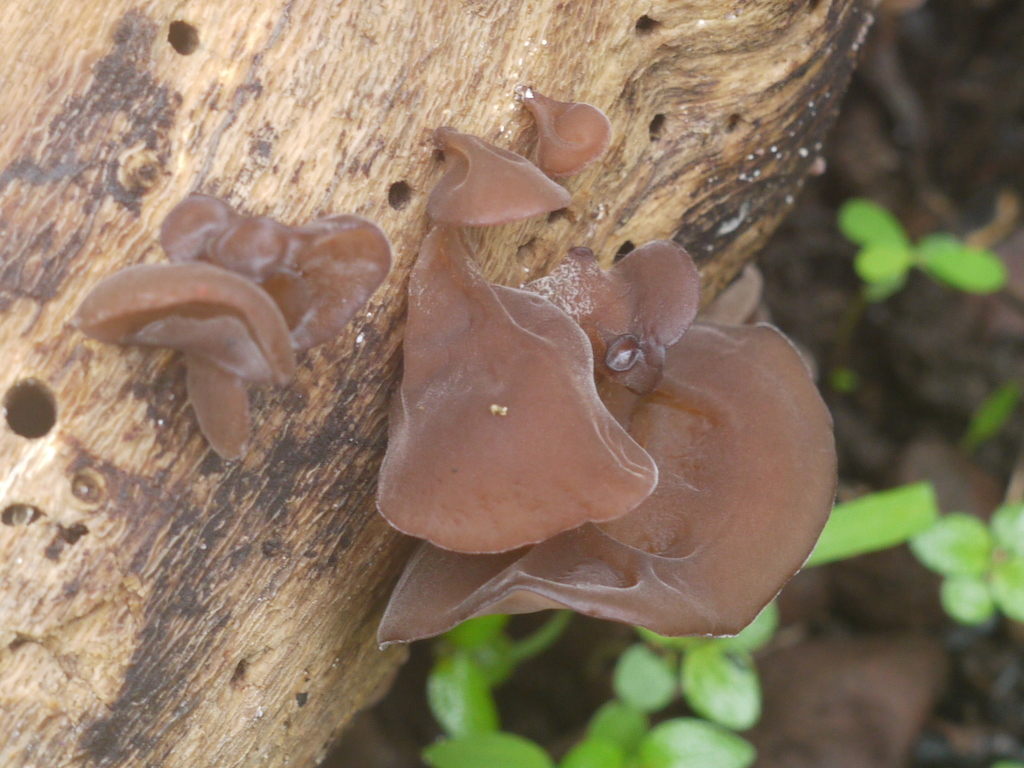
The Chinese cultivated black wood ear — distinct from the New World A. americana and the European A. auricula-judae. Wild on dead broadleaf logs across East Asia after warm rain.
Edibility
Not yet reviewed. Do not eat.
Edibility not yet reviewed. Do not eat. Its edibility hasn't been reviewed yet. Lookalike warnings below still apply.
Rarity
common
Trophic mode
saprotrophic
Typical peak
Jun & Sep
Season
Spring–autumn after rain — typical fruiting months: Mar, Apr, May, Jun, Jul, Aug, Sep, Oct.
Host trees & substrate
- Dead oak log
- Dead Castanopsis log
- Dead willow
Key identification features
- Gelatinous ear-shaped fruitbody
- Brown to nearly black on top, paler velvety underside
- Rehydrates from dry
Where it grows
See live fruiting predictions for Chinese Black Wood Ear on the forecast home page, or browse the full field guide.
Always confirm wild-mushroom identification with multiple sources and a knowledgeable local expert before consuming. Read the foraging safety guide.