Chaga
Inonotus obliquus
Also called: Chaga, Clinker Polypore, Birch Conk, Black Mass
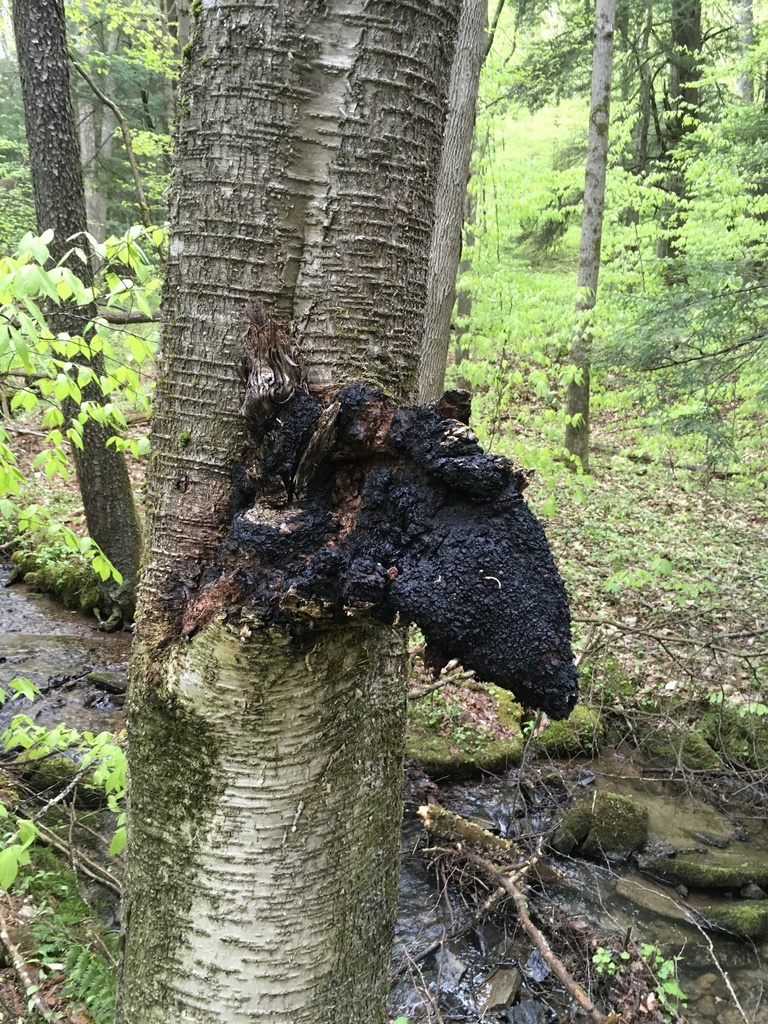
Overview
Chaga is not harvested for fruiting bodies — it is a perennial sterile conk present year-round on living birch. Bioactive compound concentration peaks during birch dormancy, when sap has receded to the root system after sustained freezing temperatures. The best chaga is winter chaga. Harvest only the outer black material, leaving the orange-brown interior layer and at least 20% of the conk mass to allow the organism to survive and regrow. Sustainable harvest from the same tree can be repeated every 3–5 years.
Conditions when it's found
- Soil temp, past 3 days
- Usually 25°F to 35°F · typical 30°F
- Air temp, past week
- Usually 16°F to 37°F · typical 30°F
- Night lows, past week
- Usually 11°F to 34°F · typical 26°F
- Rain, past 2 weeks
- Usually 0.56 in to 2.91 in · typical 1.52 in
- Topsoil wetness
- Usually 66% to 87% · typical 72%
From the weather before 20 dated records on GBIF.org, using NASA POWER daily data. "Usually" covers the middle 80% of records. A guide to when it shows up, not a guarantee.
Season
Year-round (presence, not fruiting) — typical fruiting months: , Jan, Feb, Mar, Apr, May, Jun, Jul, Aug, Sep, Oct, Nov.
Host trees & substrate
- Living birch (yellow, paper, black)
Where it grows
See live fruiting predictions for Chaga on the forecast home page, or browse the full field guide.
Always confirm wild-mushroom identification with multiple sources and a knowledgeable local expert before consuming. Read the foraging safety guide.