Scarlet Caterpillar Club
Cordyceps militaris
Also called: Scarlet Caterpillar Club, Orange Caterpillar Cordyceps, Trooping Cordyceps
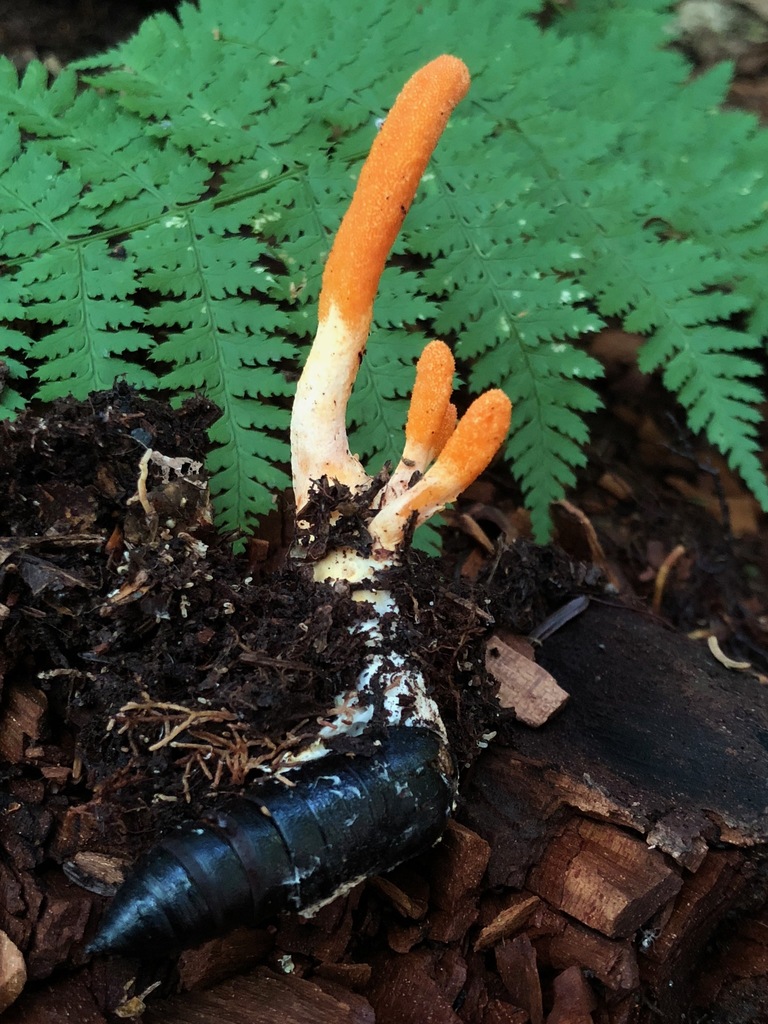
Overview
Bright orange-red club arising from a buried moth or butterfly pupa (Lepidoptera). Widespread across North America in mossy forest, lawn edges, and woodland soil — Jul–Oct. Look for the orange finger sticking out of moss or duff, then dig gently to expose the mummified host pupa — the diagnostic confirmation.
Conditions when it's found
- Soil temp, past 3 days
- Usually 42°F to 74°F · typical 53°F
- Air temp, past week
- Usually 45°F to 75°F · typical 54°F
- Night lows, past week
- Usually 41°F to 67°F · typical 49°F
- Rain, past 2 weeks
- Usually 0.52 in to 3.69 in · typical 2.12 in
- Topsoil wetness
- Usually 53% to 90% · typical 67%
From the weather before 20 dated records on GBIF.org, using NASA POWER daily data. "Usually" covers the middle 80% of records. A guide to when it shows up, not a guarantee.
Season
Jul–Oct — typical fruiting months: Jul, Aug, Sep, Oct.
Host trees & substrate
- Buried lepidopteran pupae in moss/duff
Where it grows
See live fruiting predictions for Scarlet Caterpillar Club on the forecast home page, or browse the full field guide.
Always confirm wild-mushroom identification with multiple sources and a knowledgeable local expert before consuming. Read the foraging safety guide.