Gypsy Mushroom
Cortinarius caperatus
Family: Cortinariaceae
Also called: Gypsy Mushroom, Rozites caperatus, Chroogomphus, Gypsy Nightcap
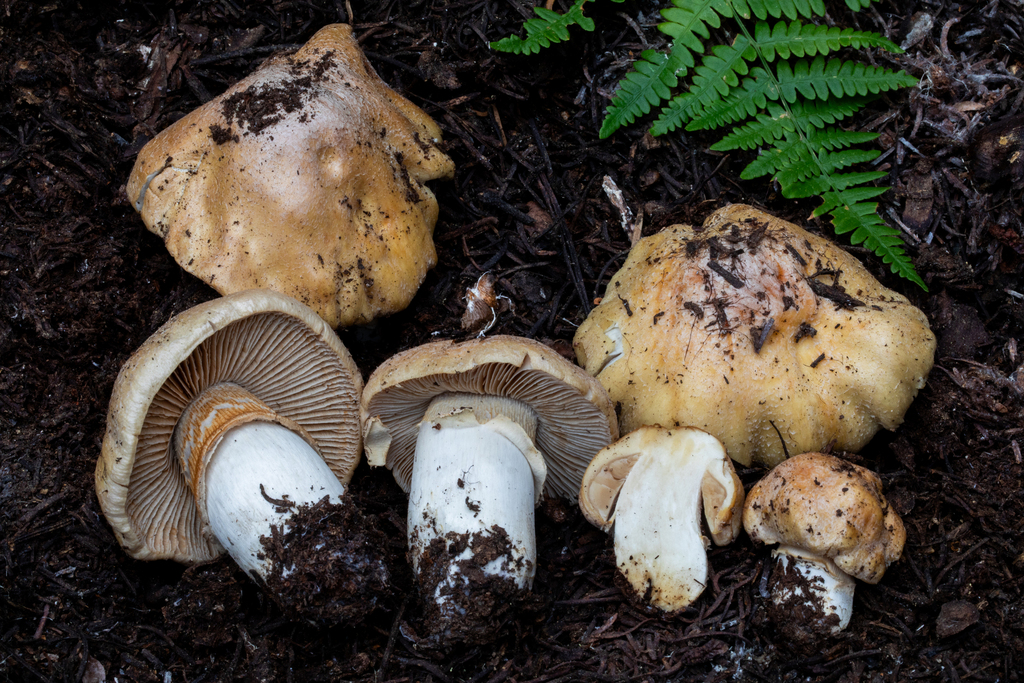
Overview
Conifer and birch woods of Northern and Central Europe. rubellus, C. orellanus). Only confident foragers should consider the Gypsy.
Conditions when it's found
- Soil temp, past 3 days
- Usually 51°F to 66°F · typical 62°F
- Air temp, past week
- Usually 51°F to 67°F · typical 62°F
- Night lows, past week
- Usually 42°F to 60°F · typical 54°F
- Rain, past 2 weeks
- Usually 1.22 in to 4.29 in · typical 2.99 in
- Topsoil wetness
- Usually 42% to 74% · typical 62%
From the weather before 20 dated records on GBIF.org, using NASA POWER daily data. "Usually" covers the middle 80% of records. A guide to when it shows up, not a guarantee.
Season
Aug–Sep — typical fruiting months: Jul, Aug, Sep.
Host trees & substrate
- Mycorrhizal with Norway spruce
- Mycorrhizal with Scots pine
- Mycorrhizal with birch
Toxic lookalikes
- Deadly Webcap (Cortinarius rubellus)deadly
Conical orange cap, NO white bloom, NO ring. Causes irreversible kidney failure. Beginners should avoid the entire genus.
Where it grows
See live fruiting predictions for Gypsy Mushroom on the forecast home page, or browse the full field guide.
Always confirm wild-mushroom identification with multiple sources and a knowledgeable local expert before consuming. Read the foraging safety guide.