False Morel (TOXIC)
Gyromitra esculenta
Family: Discinaceae
Also called: False Morel, Beefsteak Morel, Brain Mushroom, Turban Fungus
Overview
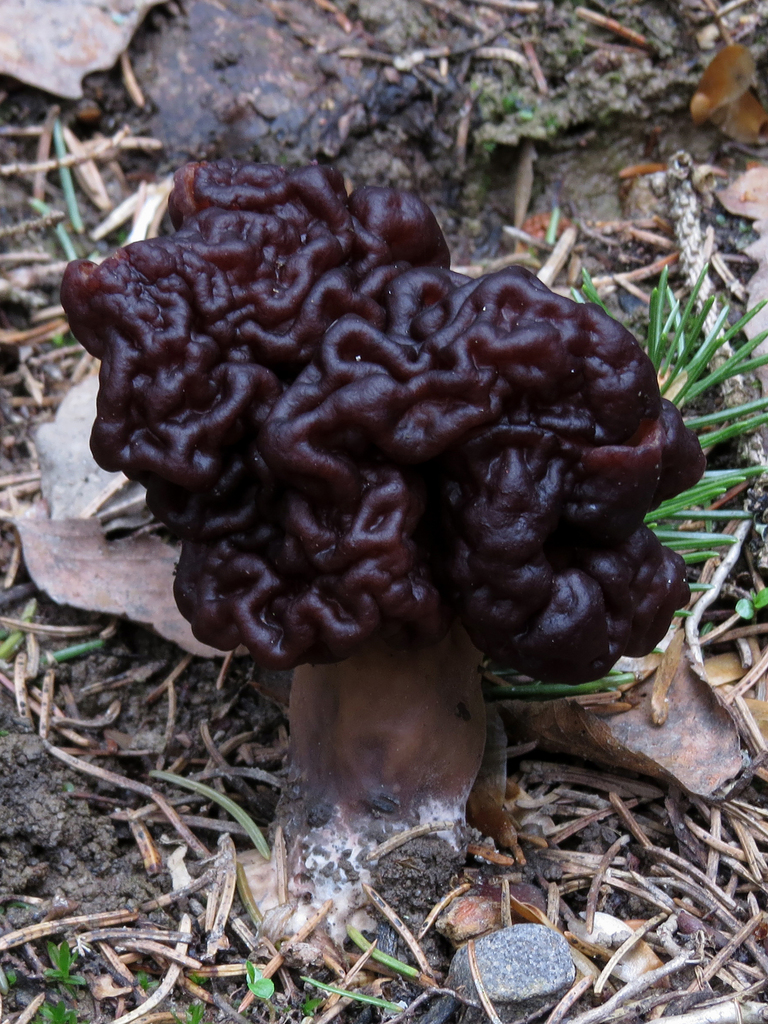
DANGEROUS FALSE MOREL — contains gyromitrin, which metabolizes to monomethylhydrazine (a rocket-fuel component and known carcinogen). Causes hemolytic anemia and liver failure; even cooking-vapor exposure is hazardous and some individuals react to parboiled specimens. Cap is BRAIN-LIKE, saddle-shaped, lobed and wrinkled — NEVER honeycombed or pitted like a true morel. Stem is not hollow throughout. Primarily conifer associate, early spring (Mar–Apr), often with or before true morels. Catalogued for identification only; do not consume. Not related to Fistulina hepatica (beefsteak fungus).
Conditions when it's found
- Soil temp, past 3 days
- Usually 38°F to 48°F · typical 42°F
- Air temp, past week
- Usually 39°F to 45°F · typical 42°F
- Night lows, past week
- Usually 34°F to 40°F · typical 36°F
- Rain, past 2 weeks
- Usually 0.39 in to 3.68 in · typical 1.59 in
- Topsoil wetness
- Usually 70% to 87% · typical 82%
From the weather before 20 dated records on GBIF.org, using NASA POWER daily data. "Usually" covers the middle 80% of records. A guide to when it shows up, not a guarantee.
Season
Late Mar – May — typical fruiting months: Feb, Mar, Apr.
Host trees & substrate
- Conifer (white pine, hemlock) duff
- Sandy disturbed ground
Where it grows
See live fruiting predictions for False Morel (TOXIC) on the forecast home page, or browse the full field guide.
Always confirm wild-mushroom identification with multiple sources and a knowledgeable local expert before consuming. Read the foraging safety guide.