Honey Mushroom
Armillaria mellea complex
Also called: Honey Mushroom, Honeys, Stumpers, Pipinky, Bootlace Fungus
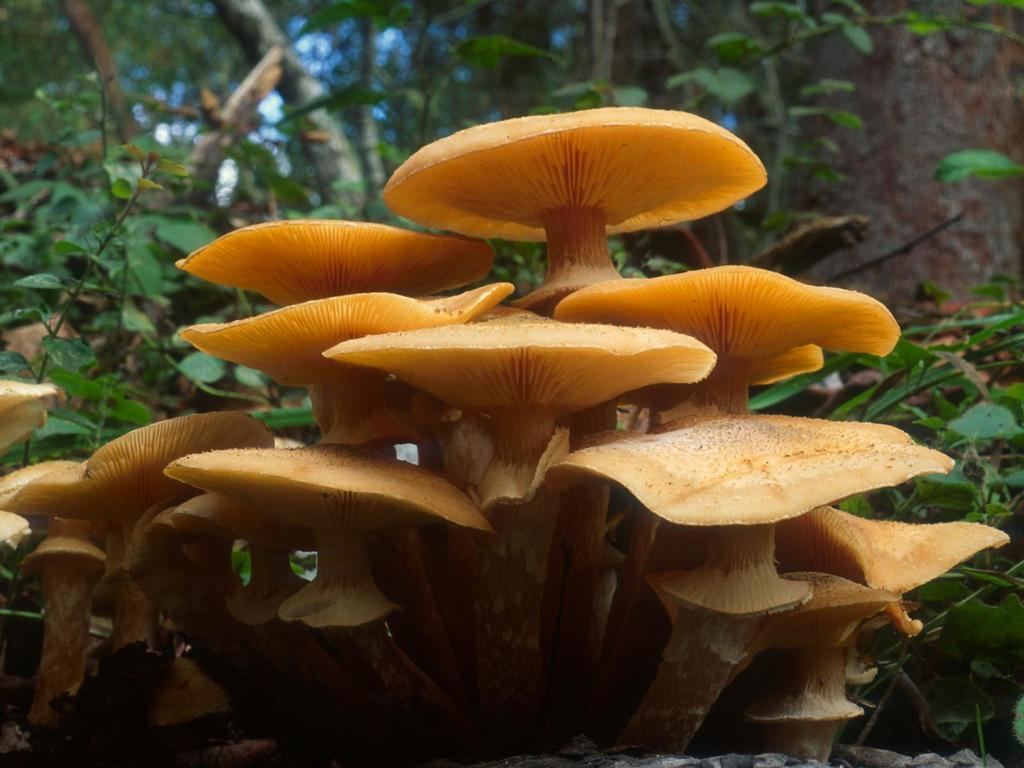
Overview
One of the most aggressive wood-decay pathogens in North America — actively kills living trees via black rhizomorph 'shoestrings', then keeps decomposing the dead root system for years. A fall cluster at an oak base is often the fruiting of an active tree killer.
Conditions when it's found
- Soil temp, past 3 days
- Usually 47°F to 69°F · typical 56°F
- Air temp, past week
- Usually 47°F to 69°F · typical 54°F
- Night lows, past week
- Usually 39°F to 60°F · typical 49°F
- Rain, past 2 weeks
- Usually 0.61 in to 3.02 in · typical 1.58 in
- Topsoil wetness
- Usually 41% to 78% · typical 66%
From the weather before 20 dated records on GBIF.org, using NASA POWER daily data. "Usually" covers the middle 80% of records. A guide to when it shows up, not a guarantee.
Season
Sep–Oct — typical fruiting months: Aug, Sep.
Host trees & substrate
- Oak and hardwood base
Where it grows
See live fruiting predictions for Honey Mushroom on the forecast home page, or browse the full field guide.
Always confirm wild-mushroom identification with multiple sources and a knowledgeable local expert before consuming. Read the foraging safety guide.