Shiitake
Lentinula edodes
Family: Omphalotaceae
Also called: Shiitake, Black Forest Mushroom, Xianggu, Donko, Pyogo
Overview
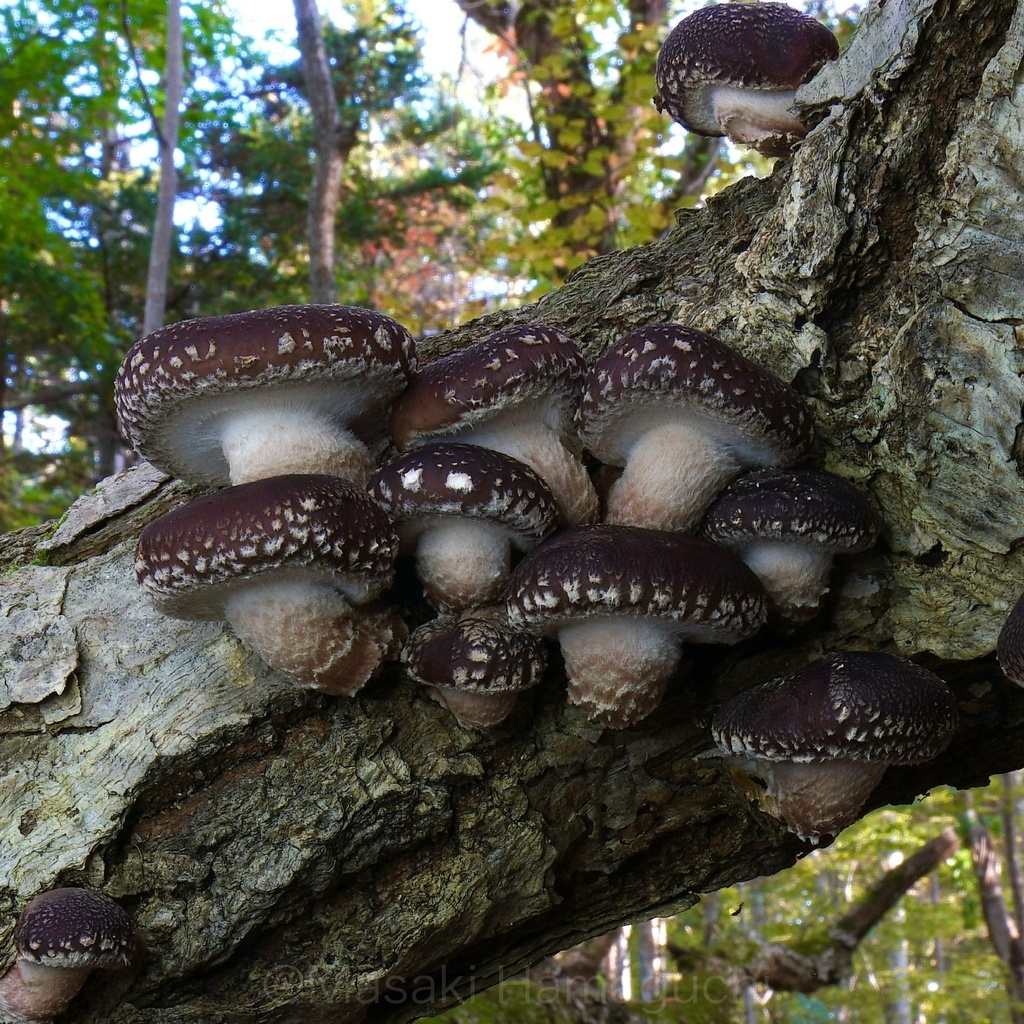
Wild shiitake fruits on dead hardwood logs (Castanopsis, Quercus, Lithocarpus, Pasania) in mid-elevation broadleaf forest from Japan and Korea through southern China and into NE highland SE Asia. Spring and autumn flushes after warm rain. The vast majority of shiitake in trade is cultivated on inoculated oak logs.
Conditions when it's found
- Soil temp, past 3 days
- Usually 42°F to 65°F · typical 60°F
- Air temp, past week
- Usually 42°F to 66°F · typical 61°F
- Night lows, past week
- Usually 33°F to 59°F · typical 51°F
- Rain, past 2 weeks
- Usually 0.42 in to 3.68 in · typical 1.46 in
- Topsoil wetness
- Usually 43% to 81% · typical 56%
From the weather before 17 dated records on GBIF.org, using NASA POWER daily data. "Usually" covers the middle 80% of records. A guide to when it shows up, not a guarantee.
Season
Mar–May & Oct–Dec — typical fruiting months: Feb, Mar, Apr, Sep, Oct, Nov.
Host trees & substrate
- Dead Castanopsis log
- Dead Quercus serrata log
- Dead Pasania log
Key identification features
- Brown cap with cream cracks, often hairy margin
- White gills, white spore print
- Tough, fibrous central stem
- On dead hardwood logs in moist forest
Where it grows
See live fruiting predictions for Shiitake on the forecast home page, or browse the full field guide.
Always confirm wild-mushroom identification with multiple sources and a knowledgeable local expert before consuming. Read the foraging safety guide.