Jack-o'-Lantern
Omphalotus olearius
Family: Omphalotaceae
Also called: Jack-o'-Lantern, Olive Oysterling
Overview
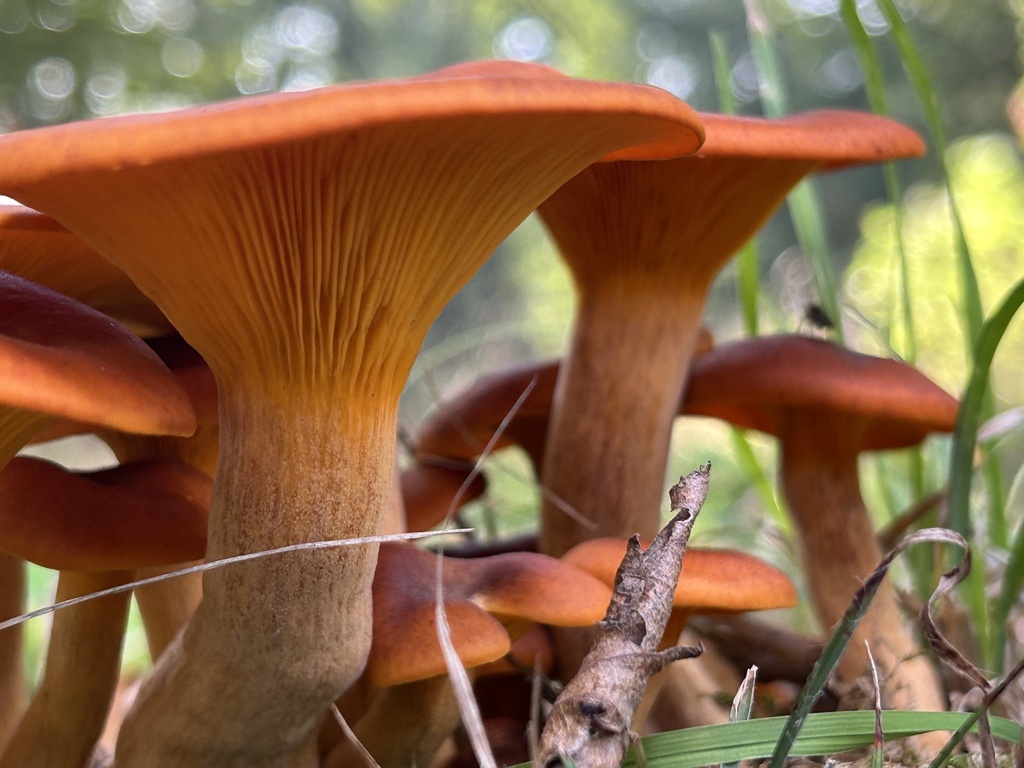
Bright orange clustered mushroom on the base of olive, oak, and chestnut in Mediterranean Europe. True gills (not ridges), all flesh orange, bioluminescent when very fresh. Severe gastrointestinal poisoning. Routinely confused with the Golden Chanterelle.
Conditions when it's found
- Soil temp, past 3 days
- Usually 46°F to 74°F · typical 65°F
- Air temp, past week
- Usually 48°F to 72°F · typical 64°F
- Night lows, past week
- Usually 40°F to 63°F · typical 58°F
- Rain, past 2 weeks
- Usually 0.27 in to 3.13 in · typical 0.99 in
- Topsoil wetness
- Usually 41% to 75% · typical 53%
From the weather before 20 dated records on GBIF.org, using NASA POWER daily data. "Usually" covers the middle 80% of records. A guide to when it shows up, not a guarantee.
Season
Sep–Nov — typical fruiting months: Aug, Sep, Oct, Nov.
Host trees & substrate
- Dead / dying olive
- Dead / dying oak
- Dead / dying chestnut
Toxic lookalikes
- Golden Chanterelle (Cantharellus cibarius)toxic
Chanterelles have ridges (false gills) not blade-like true gills, grow singly from the ground (not clustered on wood), and have white-cream flesh — not orange throughout.
Where it grows
See live fruiting predictions for Jack-o'-Lantern on the forecast home page, or browse the full field guide.
Always confirm wild-mushroom identification with multiple sources and a knowledgeable local expert before consuming. Read the foraging safety guide.