Oyster
Pleurotus ostreatus
Also called: Oyster Mushroom, Pearl Oyster, Tree Oyster, Hiratake
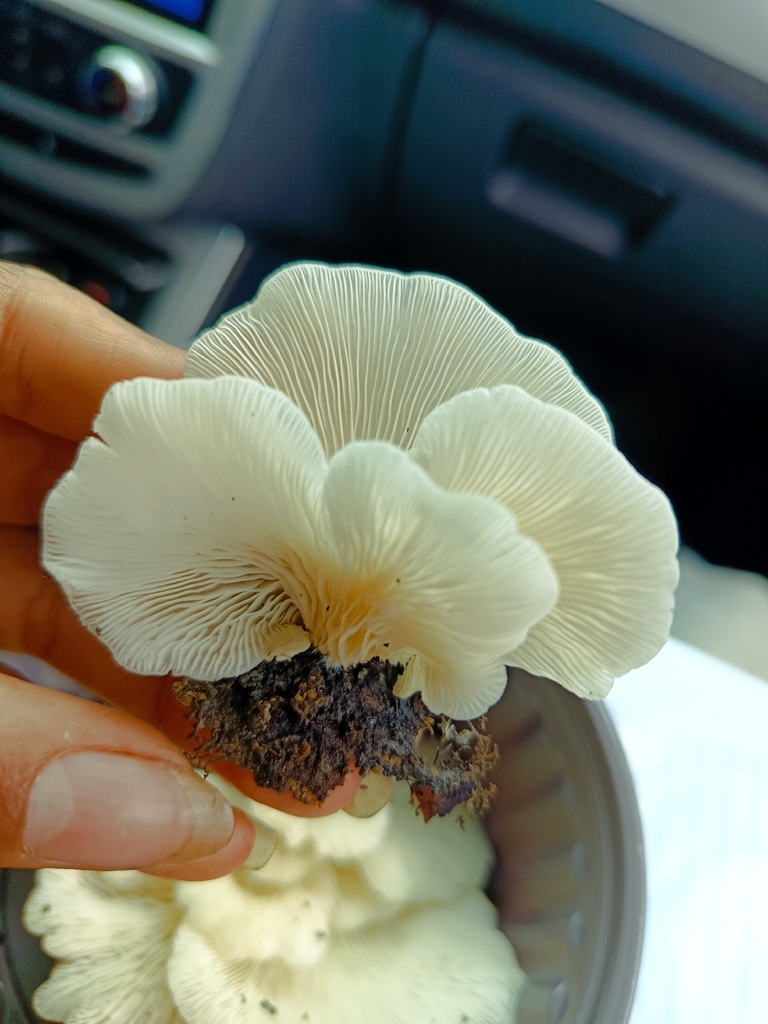
Overview
Saprotroph on dead and dying hardwood — beech, maple, elm, poplar. May weakly parasitize very stressed living trees but primarily decomposes deadwood.
Edibility
Not yet reviewed. Do not eat.
Edibility not yet reviewed. Do not eat. Its edibility hasn't been reviewed yet. Lookalike warnings below still apply.
Rarity
common
Trophic mode
saprotrophic
Typical peak
Oct–Nov
Conditions when it's found
- Soil temp, past 3 days
- Usually 30°F to 41°F · typical 37°F
- Air temp, past week
- Usually 29°F to 40°F · typical 36°F
- Night lows, past week
- Usually 26°F to 37°F · typical 33°F
- Rain, past 2 weeks
- Usually 0.7 in to 2.58 in · typical 1.39 in
- Topsoil wetness
- Usually 62% to 77% · typical 73%
From the weather before 18 dated records on GBIF.org, using NASA POWER daily data. "Usually" covers the middle 80% of records. A guide to when it shows up, not a guarantee.
Season
Mar–May & Oct–Dec — typical fruiting months: Feb, Mar, Apr, Sep, Oct, Nov.
Host trees & substrate
- Dead beech
- Maple
- Oak
- Poplar logs
Where it grows
See live fruiting predictions for Oyster on the forecast home page, or browse the full field guide.
Always confirm wild-mushroom identification with multiple sources and a knowledgeable local expert before consuming. Read the foraging safety guide.