Birch Polypore
Fomitopsis betulina
Family: Fomitopsidaceae
Overview
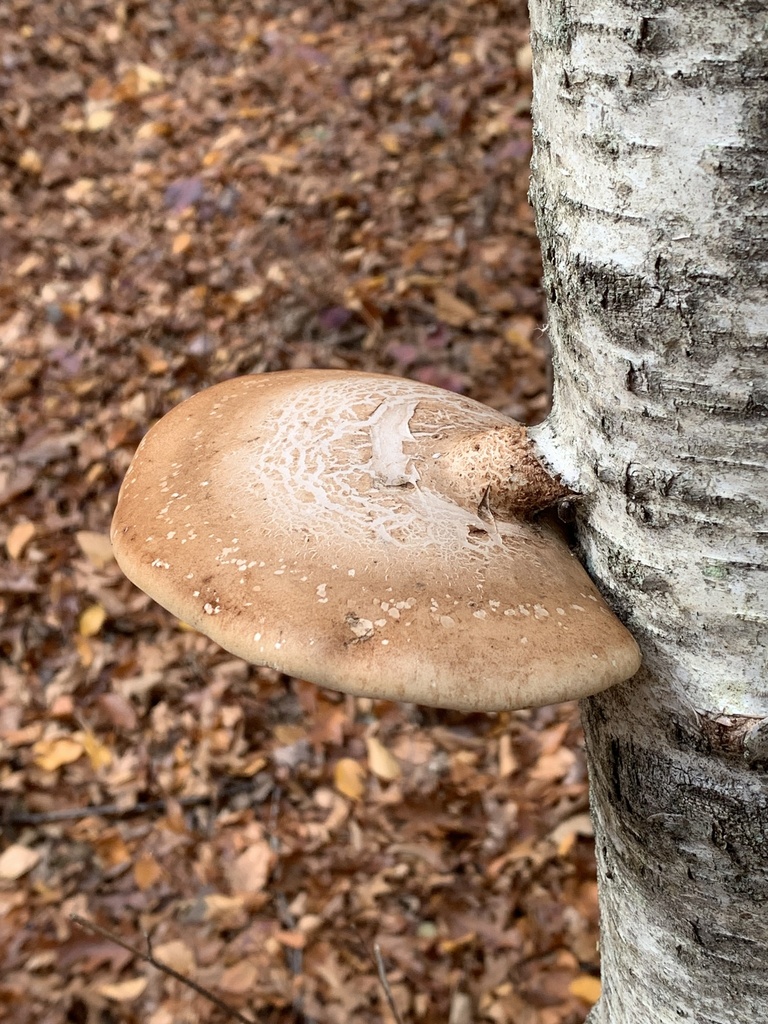
Pale kidney-shaped bracket strictly on dead and dying birch across the temperate and boreal northern hemisphere. Famously carried by the Iceman (Ötzi) as a medicinal kit. Bitter — used as tea, tinder, and strop for sharpening blades, not as food.
Edibility
Inedible
Rarity
common
Trophic mode
parasitic-saprotrophic
Conditions when it's found
- Soil temp, past 3 days
- Usually 27°F to 41°F · typical 33°F
- Air temp, past week
- Usually 26°F to 42°F · typical 35°F
- Night lows, past week
- Usually 23°F to 40°F · typical 32°F
- Rain, past 2 weeks
- Usually 0.83 in to 2.46 in · typical 1.77 in
- Topsoil wetness
- Usually 61% to 88% · typical 72%
From the weather before 20 dated records on GBIF.org, using NASA POWER daily data. "Usually" covers the middle 80% of records. A guide to when it shows up, not a guarantee.
Host trees & substrate
- Local forest substrate
Key identification features
- Pale tan kidney-shaped bracket on birch only
- Smooth white pore surface
- Soft when young, corky when old
See live fruiting predictions for Birch Polypore on the forecast home page, or browse the full field guide.
Always confirm wild-mushroom identification with multiple sources and a knowledgeable local expert before consuming. Read the foraging safety guide.