King Oyster
Pleurotus eryngii
Family: Pleurotaceae
Also called: King Oyster, King Trumpet, Cardoncello, Seta de cardo, Eringi
Overview
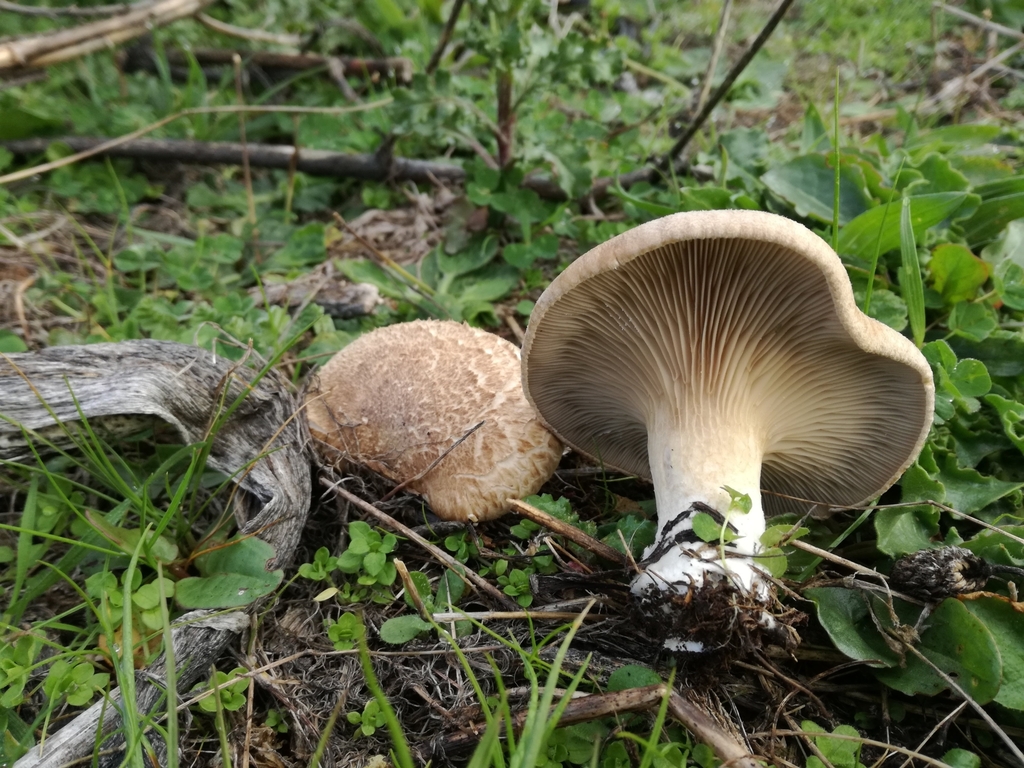
Mediterranean wild oyster that fruits from the dead roots of Eryngium (sea holly) and other Apiaceae on dry stony grassland. Thick white stem, small tan cap.
Conditions when it's found
- Soil temp, past 3 days
- Usually 45°F to 64°F · typical 52°F
- Air temp, past week
- Usually 46°F to 66°F · typical 54°F
- Night lows, past week
- Usually 38°F to 59°F · typical 45°F
- Rain, past 2 weeks
- Usually 0.2 in to 2.89 in · typical 0.76 in
- Topsoil wetness
- Usually 38% to 76% · typical 55%
From the weather before 20 dated records on GBIF.org, using NASA POWER daily data. "Usually" covers the middle 80% of records. A guide to when it shows up, not a guarantee.
Season
Oct–Apr — typical fruiting months: Sep, Oct, Nov, , Jan, Feb, Mar, Apr.
Host trees & substrate
- Dead roots of Eryngium (sea holly)
- Dead roots of other Apiaceae
Where it grows
See live fruiting predictions for King Oyster on the forecast home page, or browse the full field guide.
Always confirm wild-mushroom identification with multiple sources and a knowledgeable local expert before consuming. Read the foraging safety guide.