The Sickener
Russula emetica
Family: Russulaceae
Also called: The Sickener, Emetic Russula, Vomiting Russula
Overview
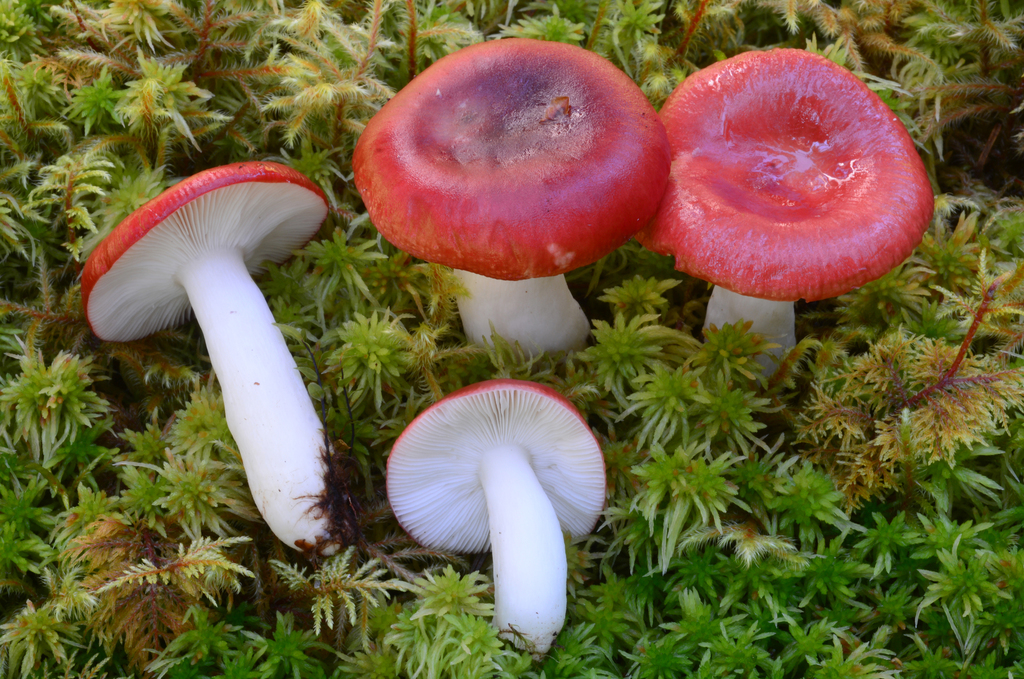
Vivid red-capped Russula of damp conifer mossbeds. Intensely acrid; causes severe vomiting. The default 'taste test' Russula to avoid.
Edibility
Toxic
Rarity
common
Trophic mode
mycorrhizal
Typical peak
Sep–Oct
Conditions when it's found
- Soil temp, past 3 days
- Usually 49°F to 67°F · typical 61°F
- Air temp, past week
- Usually 50°F to 67°F · typical 61°F
- Night lows, past week
- Usually 46°F to 59°F · typical 54°F
- Rain, past 2 weeks
- Usually 0.65 in to 3.66 in · typical 1.62 in
- Topsoil wetness
- Usually 39% to 74% · typical 54%
From the weather before 20 dated records on GBIF.org, using NASA POWER daily data. "Usually" covers the middle 80% of records. A guide to when it shows up, not a guarantee.
Season
Sep–Nov — typical fruiting months: Aug, Sep, Oct.
Host trees & substrate
- Mycorrhizal with pine
- Mycorrhizal with hemlock
Where it grows
See live fruiting predictions for The Sickener on the forecast home page, or browse the full field guide.
Always confirm wild-mushroom identification with multiple sources and a knowledgeable local expert before consuming. Read the foraging safety guide.