Matsutake
Tricholoma matsutake
Family: Tricholomataceae
Also called: Matsutake, Pine Mushroom, Songi, Songrong
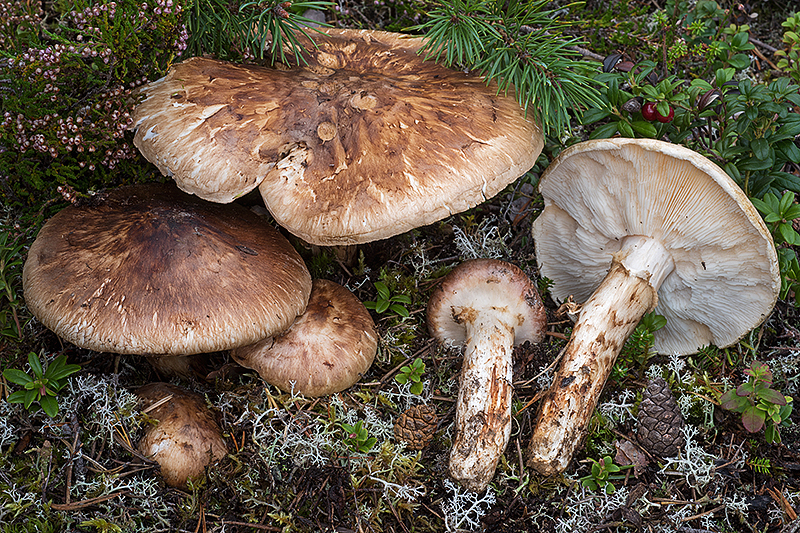
Overview
Cinnamon-spice scented autumn mycorrhizal mushroom of red pine (Pinus densiflora) in Japan and Korea, and Pinus yunnanensis / P. tabuliformis stands in China. Strictly protected commercial harvest in many areas. Fruits buried under needle duff — locate by the 'shiro' ring.
Conditions when it's found
- Soil temp, past 3 days
- Usually 45°F to 61°F · typical 54°F
- Air temp, past week
- Usually 45°F to 61°F · typical 54°F
- Night lows, past week
- Usually 40°F to 56°F · typical 50°F
- Rain, past 2 weeks
- Usually 0.7 in to 2.36 in · typical 1.27 in
- Topsoil wetness
- Usually 44% to 76% · typical 63%
From the weather before 20 dated records on GBIF.org, using NASA POWER daily data. "Usually" covers the middle 80% of records. A guide to when it shows up, not a guarantee.
Season
Sep–Nov — typical fruiting months: Aug, Sep, Oct.
Host trees & substrate
- Living Pinus densiflora (red pine)
Key identification features
- Strong cinnamon / red-hot-cinnamon spice aroma
- White stem with brown fibrous patches, partial ring
- White gills, white spore print
- Half-buried in pine duff in cool autumn
Toxic lookalikes
- Smooth lepiota (Amanita smithiana)deadly
Pacific Rim deadly lookalike — no cinnamon smell, has volva at base. Several poisonings annually among inexperienced matsutake hunters.
Where it grows
See live fruiting predictions for Matsutake on the forecast home page, or browse the full field guide.
Always confirm wild-mushroom identification with multiple sources and a knowledgeable local expert before consuming. Read the foraging safety guide.