Burgundy Truffle (autumn)
Tuber aestivum var. uncinatum
Family: Tuberaceae
Overview
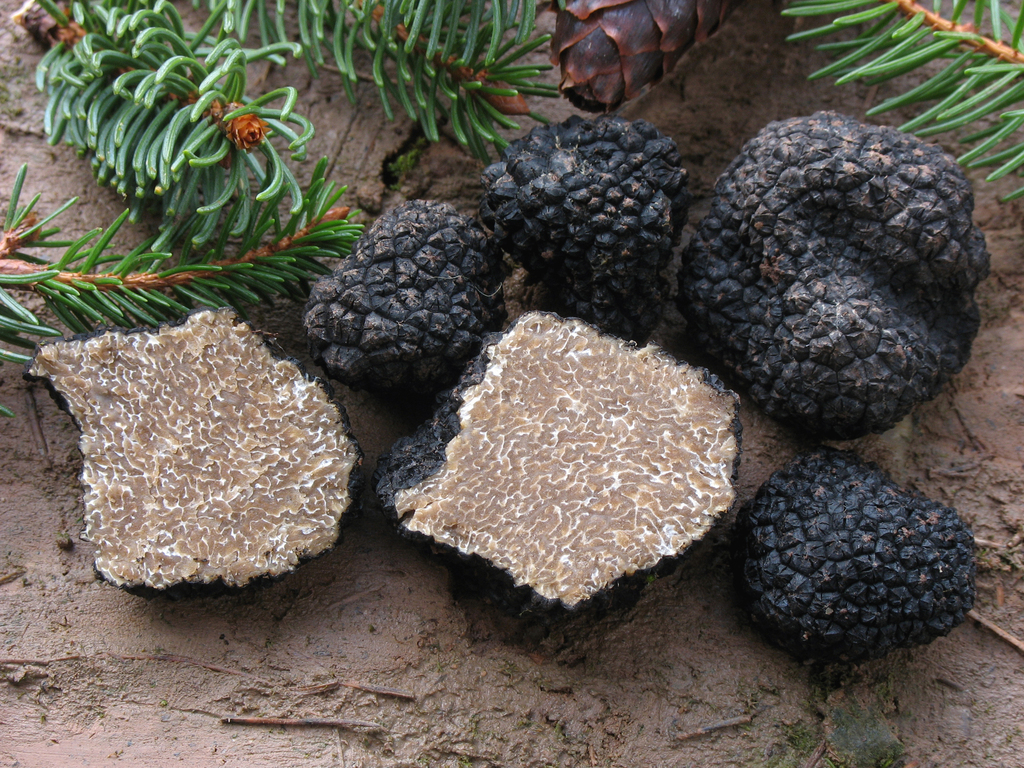
Autumn form of the burgundy truffle. Coarse black pyramidal warts, hazelnut-coloured interior with intense aroma. Picked September–December under European oak, hazel, and hornbeam on chalky soil.
Edibility
Not yet reviewed. Do not eat.
Edibility not yet reviewed. Do not eat. Its edibility hasn't been reviewed yet. Lookalike warnings below still apply.
Rarity
common
Trophic mode
mycorrhizal
Conditions when it's found
- Soil temp, past 3 days
- Usually 35°F to 65°F · typical 53°F
- Air temp, past week
- Usually 37°F to 65°F · typical 55°F
- Night lows, past week
- Usually 33°F to 56°F · typical 48°F
- Rain, past 2 weeks
- Usually 0.36 in to 4.44 in · typical 1.67 in
- Topsoil wetness
- Usually 46% to 88% · typical 62%
From the weather before 20 dated records on GBIF.org, using NASA POWER daily data. "Usually" covers the middle 80% of records. A guide to when it shows up, not a guarantee.
Host trees & substrate
- Local forest substrate
Key identification features
- Black pyramidal warts
- Hazelnut-brown marbled interior
- Strong nutty / chocolate aroma
- Calcareous soils, often near oak
See live fruiting predictions for Burgundy Truffle (autumn) on the forecast home page, or browse the full field guide.
Always confirm wild-mushroom identification with multiple sources and a knowledgeable local expert before consuming. Read the foraging safety guide.