Black Velvet Bolete
Tylopilus alboater
Family: Boletaceae
Also called: Black Velvet Bolete, Black-and-White Tylopilus
Overview
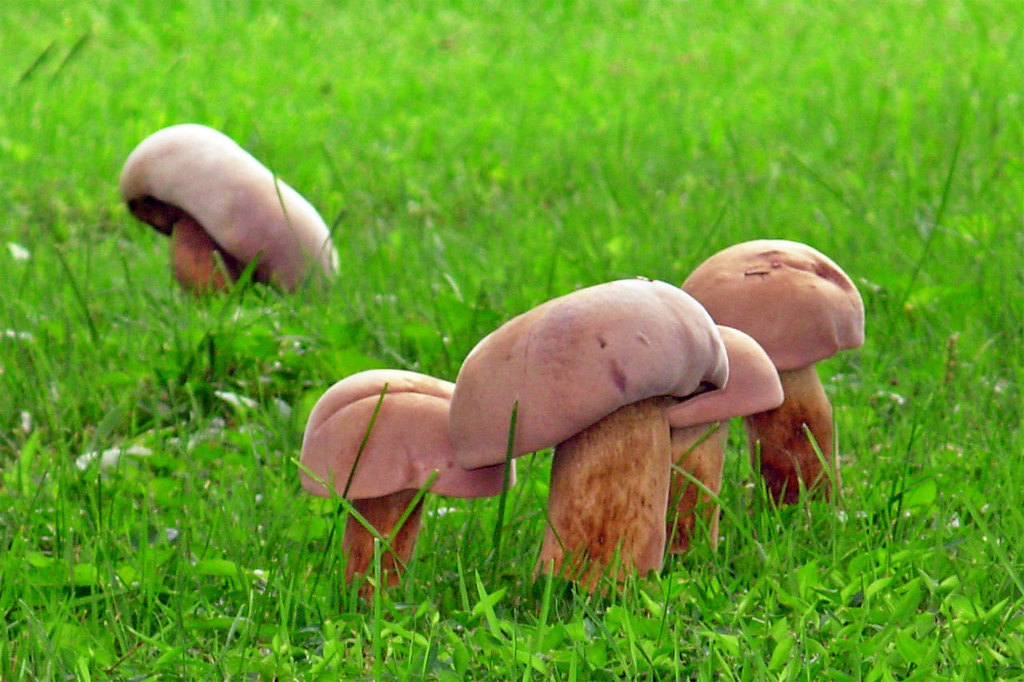
Velvety black cap and stipe with white pores aging to pink. Slight pink-then-black stain.
Edibility
Not yet reviewed. Do not eat.
Edibility not yet reviewed. Do not eat. Its edibility hasn't been reviewed yet. Lookalike warnings below still apply.
Rarity
uncommon
Trophic mode
mycorrhizal
Typical peak
Sep–Oct
Conditions when it's found
- Soil temp, past 3 days
- Usually 65°F to 75°F · typical 71°F
- Air temp, past week
- Usually 67°F to 76°F · typical 72°F
- Night lows, past week
- Usually 57°F to 66°F · typical 63°F
- Rain, past 2 weeks
- Usually 1.1 in to 3.56 in · typical 2.57 in
- Topsoil wetness
- Usually 42% to 71% · typical 53%
From the weather before 13 dated records on GBIF.org, using NASA POWER daily data. "Usually" covers the middle 80% of records. A guide to when it shows up, not a guarantee.
Season
Sep–Nov — typical fruiting months: Aug, Sep, Oct.
Host trees & substrate
- Mycorrhizal with oak
- Mycorrhizal with beech
- Mycorrhizal with hemlock
Where it grows
See live fruiting predictions for Black Velvet Bolete on the forecast home page, or browse the full field guide.
Always confirm wild-mushroom identification with multiple sources and a knowledgeable local expert before consuming. Read the foraging safety guide.