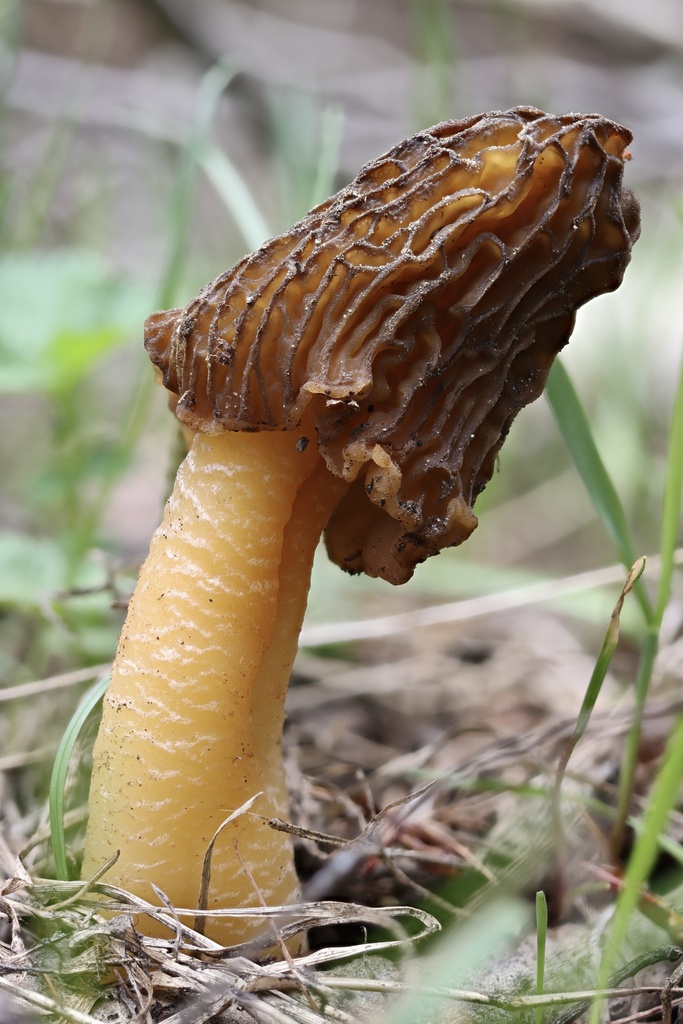
Wrinkled Thimble-Cap (NOT a true morel)
Verpa bohemica
Family: Morchellaceae
Also called: Wrinkled Thimble-Cap, Early Morel, Bell Morel
Overview
EARLIEST spring fruiting (Feb–March) along cottonwood-elm riparian bottoms. The cap hangs FREE from the stem (touches only at the top apex) — true morels have caps attached around the rim. EDIBILITY CAUTION: must be parboiled; causes muscular incoordination and GI upset in some people even when cooked. Don't eat large quantities or on consecutive days.
Conditions when it's found
- Soil temp, past 3 days
- Usually 38°F to 51°F · typical 45°F
- Air temp, past week
- Usually 38°F to 52°F · typical 45°F
- Night lows, past week
- Usually 31°F to 45°F · typical 37°F
- Rain, past 2 weeks
- Usually 0.19 in to 2.7 in · typical 1.3 in
- Topsoil wetness
- Usually 55% to 85% · typical 78%
From the weather before 20 dated records on GBIF.org, using NASA POWER daily data. "Usually" covers the middle 80% of records. A guide to when it shows up, not a guarantee.
Season
Late Feb – mid Apr — typical fruiting months: Jan, Feb.
Host trees & substrate
- Cottonwood-sycamore-elm riparian bottoms
Where it grows
See live fruiting predictions for Wrinkled Thimble-Cap (NOT a true morel) on the forecast home page, or browse the full field guide.
Always confirm wild-mushroom identification with multiple sources and a knowledgeable local expert before consuming. Read the foraging safety guide.