Paddy Straw Mushroom
Volvariella volvacea
Family: Pluteaceae
Also called: Straw Mushroom, Paddy Straw, Caogu, 草菇, Nấm rơm
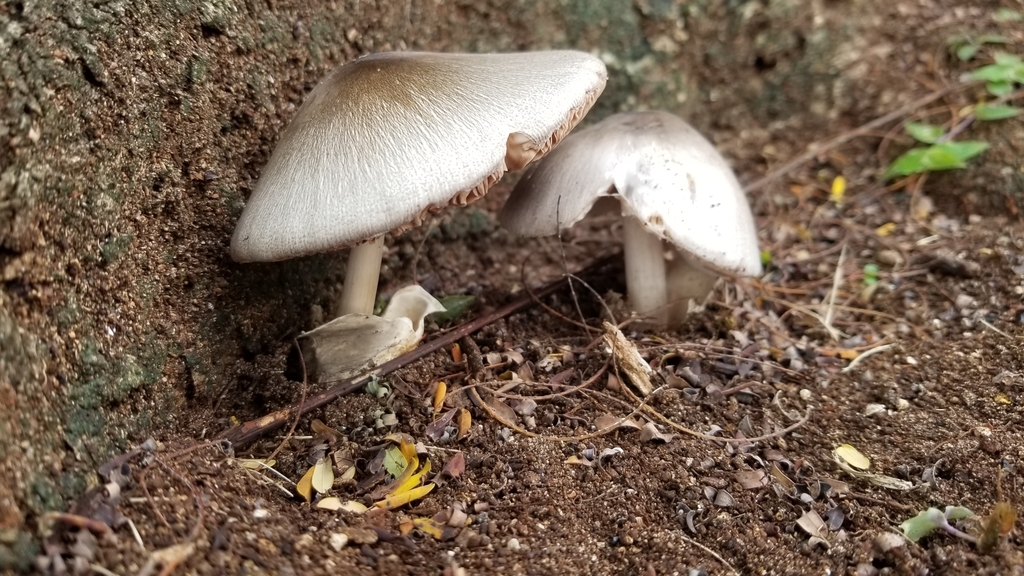
Overview
Tropical Asian straw and rice-husk decomposer. Cultivated and wild-collected across southern China, SE Asia, and West Africa. Harvested in 'egg' stage before the volva splits. CAUTION: in temperate countries it is the leading cause of deadly Amanita poisoning when foragers mistake an emerging Amanita phalloides for a straw mushroom — the two have similar egg-stage profiles but Amanita has white gills and white spore print, Volvariella has pink.
Conditions when it's found
- Soil temp, past 3 days
- Usually 72°F to 87°F · typical 80°F
- Air temp, past week
- Usually 70°F to 84°F · typical 81°F
- Night lows, past week
- Usually 59°F to 80°F · typical 75°F
- Rain, past 2 weeks
- Usually 0.27 in to 5.09 in · typical 3.17 in
- Topsoil wetness
- Usually 42% to 88% · typical 61%
From the weather before 20 dated records on GBIF.org, using NASA POWER daily data. "Usually" covers the middle 80% of records. A guide to when it shows up, not a guarantee.
Season
Year-round wet season — typical fruiting months: , Jan, Feb, Mar, Apr, May, Jun, Jul, Aug, Sep, Oct, Nov.
Host trees & substrate
- Rice straw
- Banana leaf compost
- Cotton stalks
Toxic lookalikes
- Death cap (Amanita phalloides)deadly
Egg-stage A. phalloides is the leading deadly confusion for emigrant communities harvesting 'straw mushrooms' in temperate Europe and North America. Always cut open: pink gills = Volvariella, white gills = walk away.
Where it grows
See live fruiting predictions for Paddy Straw Mushroom on the forecast home page, or browse the full field guide.
Always confirm wild-mushroom identification with multiple sources and a knowledgeable local expert before consuming. Read the foraging safety guide.