When are chaga in season in North Carolina?
Inonotus obliquus
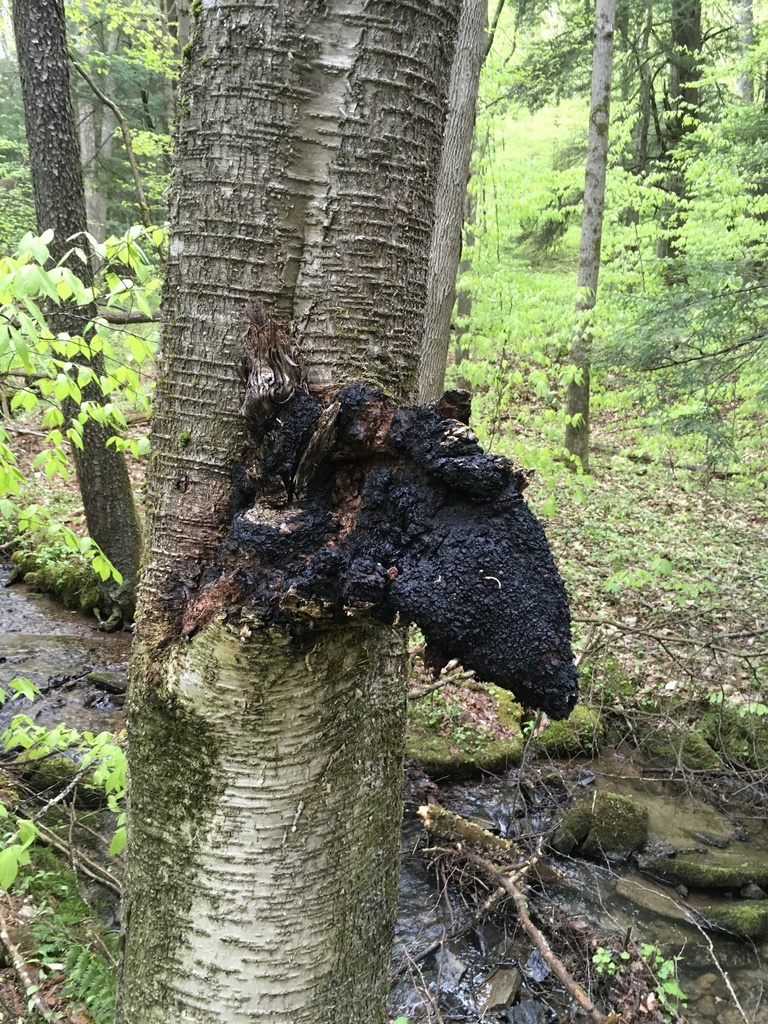
Birch present in this region — chaga possible year-round. Search living birch trunks for irregular black canker conks 2–8 inches across. The conk is a sterile mass, not a fruiting body — weather is irrelevant.
About chaga
Chaga is not harvested for fruiting bodies — it is a perennial sterile conk present year-round on living birch. Bioactive compound concentration peaks during birch dormancy, when sap has receded to the root system after sustained freezing temperatures. The best chaga is winter chaga. Harvest only the outer black material, leaving the orange-brown interior layer and at least 20% of the conk mass to allow the organism to survive and regrow. Sustainable harvest from the same tree can be repeated every 3–5 years.
Where to look in North Carolina
In the Appalachian Highlands, chaga are most often found near:
- Living birch (yellow, paper, black)
Get a live forecast for North Carolina
Season windows are averages — actual flushes are triggered by rain, temperature, and soil moisture. Understory's free forecast scores every species against the live weather for your exact spot.
Open the forecast →Other mushrooms in North Carolina
Chaga in other states
See the full Chaga field guide for identification details, edibility, and toxic lookalikes. Always confirm wild-mushroom identification with multiple sources before consuming.